
.png?width=632&name=LN_2400x1254_partnership_Gamescorekeeper%201%20(1).png)
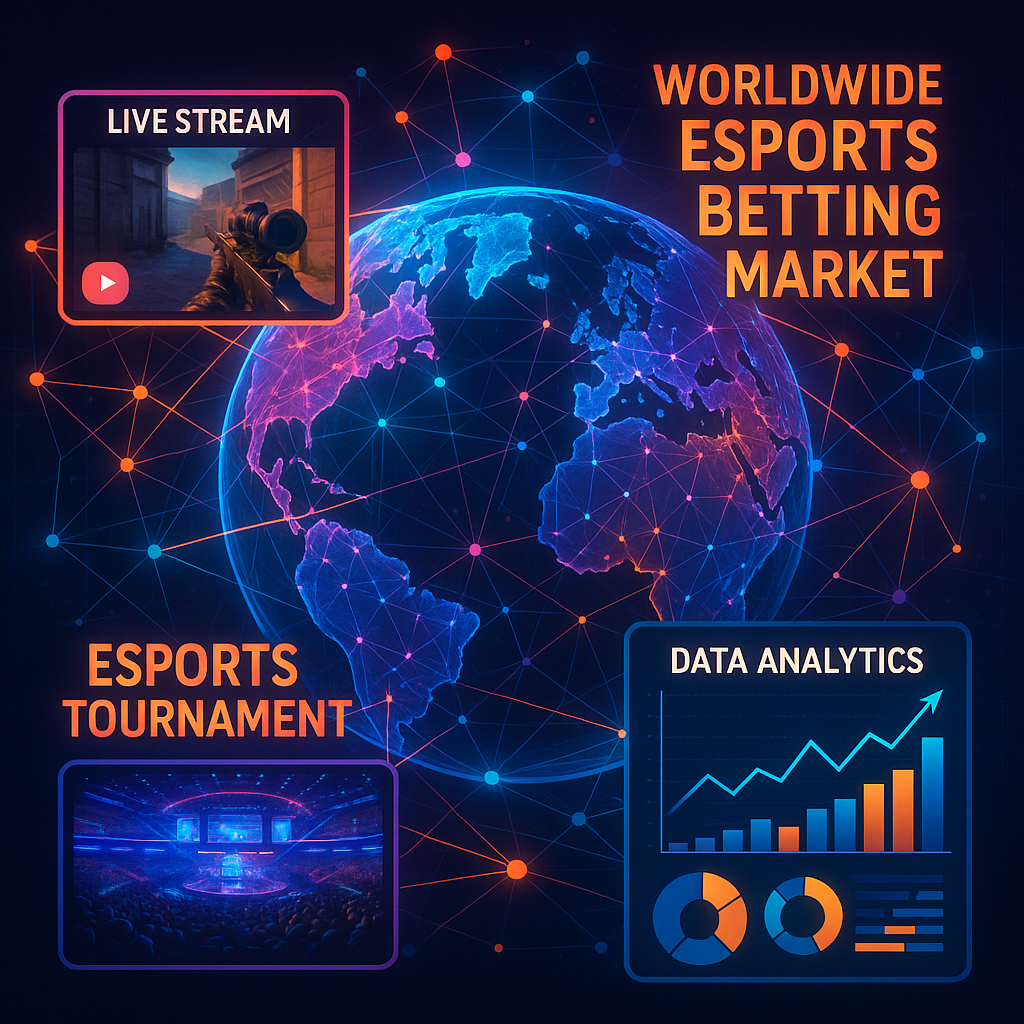
The global esports and live streaming market is experiencing unprecedented growth, reshaping how sportsbook operators engage younger audiences and capitalize on emerging betting opportunities worldwide.
The Explosive Growth of Global Esports Viewership and Revenue
The global esports industry has transformed from a niche entertainment sector into a multi-billion-dollar powerhouse that rivals traditional sports in viewership and commercial potential. Recent market analysis reveals that esports viewership has surpassed 500 million globally, with projections indicating continued double-digit growth through 2027. This unprecedented expansion is driven by the convergence of improved streaming infrastructure, mobile accessibility, and a generational shift in entertainment consumption patterns among audiences aged 18-34.
For sportsbook operators, this growth translates directly into untapped revenue opportunities. Esports betting handle has grown exponentially across regulated markets, with operators reporting that esports now ranks among their top verticals alongside football and basketball. The 24/7 nature of esports competitions—spanning multiple time zones and offering continuous betting opportunities—addresses a critical pain point for operators: maintaining engagement during traditional sports off-seasons and off-peak hours. With major tournaments generating viewership numbers that compete with premier league sporting events, the commercial case for comprehensive esports betting integration has never been stronger.
The revenue potential extends beyond simple match winner markets. In-depth game statistics, player performance data, and real-time gameplay metrics enable sophisticated player-based markets that drive deeper bettor engagement and higher average stakes. Operators leveraging advanced esports odds feeds report measurable improvements in customer retention and betting frequency, particularly among younger demographics that represent the future of the industry. The key differentiator lies in delivering accurate, real-time odds backed by expert trading coverage and advanced mathematical modeling—capabilities that separate market leaders from followers in this rapidly evolving vertical.
Regional Market Dynamics Driving Esports Betting Expansion
Regional variations in esports adoption and regulatory frameworks create distinct opportunities and challenges for operators expanding their esports betting offerings. Latin America has emerged as a high-growth region, with Brazil leading the charge through favorable regulatory developments and a passionate esports community. Mobile-first consumption patterns in this region make accessible, integrated esports betting solutions particularly valuable. Southeast Asian markets, particularly in countries with established gaming cultures, demonstrate exceptional engagement with titles like Mobile Legends, Dota 2, and CS2, requiring operators to offer localized game coverage and culturally relevant betting experiences.
European markets present a different dynamic, characterized by mature regulatory frameworks and sophisticated betting audiences. Operators in jurisdictions like Poland and Finland benefit from clear compliance pathways but face heightened competition, making product differentiation through comprehensive market coverage and innovative engagement tools essential. North American markets, while navigating complex state-by-state regulations, represent significant long-term opportunities as esports betting gains acceptance within broader sports betting legalization efforts. Operators entering these markets must prioritize regulatory compliance while delivering the seamless, mobile-optimized experiences that North American bettors expect.
African markets are witnessing explosive growth in esports engagement, driven by improving internet infrastructure and mobile penetration. The youth-skewed demographics across the continent align perfectly with esports' core audience, creating opportunities for operators who can deliver accessible, data-efficient betting platforms. Success across these diverse regions requires more than geographic expansion—it demands tailored strategies that account for local game preferences, payment methods, regulatory requirements, and cultural nuances. Operators leveraging scalable esports betting solutions with flexible integration capabilities position themselves to capitalize on regional opportunities while maintaining operational efficiency across multiple markets.
Live Streaming Technology Transforming Bettor Engagement
The integration of live streaming technology with betting platforms has fundamentally transformed esports wagering from a passive activity into an immersive, interactive experience. Unlike traditional sports, where broadcast rights create barriers to in-platform streaming, esports competitions are inherently digital, enabling seamless integration of live gameplay footage with betting interfaces. This convergence allows operators to deliver synchronized betting markets alongside real-time match action, dramatically increasing in-play engagement and bet placement frequency. Advanced streaming layers that incorporate player perspectives, instant replay capabilities, and X-ray views of game state provide bettors with actionable intelligence that informs betting decisions and builds confidence in market selections.
The technological sophistication of modern streaming integration extends beyond simple video feeds. Interactive engagement tools that overlay live statistics, probability calculations, and dynamic odds adjustments directly onto streaming interfaces create a comprehensive betting ecosystem within a single platform experience. Mobile-first implementations ensure that these rich features remain accessible across devices, addressing the reality that the majority of esports viewers—and bettors—engage primarily through smartphones. Operators implementing these integrated solutions report significant improvements in session duration, bet frequency, and customer lifetime value, particularly among younger demographics accustomed to interactive, data-rich digital experiences.
The operational advantages of streaming integration extend to risk management and market integrity. Real-time visibility into match progression enables faster market suspensions in response to significant game events, reducing operator exposure to informed betting. Synchronized data feeds that connect streaming content with odds calculations ensure market accuracy and responsiveness, building bettor trust in platform reliability. For operators evaluating esports betting solutions, the quality and sophistication of streaming integration—including latency management, data synchronization, and engagement feature depth—represents a critical differentiator that directly impacts both bettor satisfaction and operational performance. The future of esports betting lies in platforms that don't just offer odds alongside streams, but create fully integrated ecosystems where content, data, and wagering merge seamlessly.
Emerging Esports Titles Creating New Betting Opportunities
The esports landscape continuously evolves with emerging titles creating fresh betting opportunities that attract new audiences and diversify operator portfolios. While established games like CS2, Dota 2, and League of Legends maintain strong betting interest, emerging titles and mobile-focused games are expanding the addressable market significantly. Mobile esports titles, particularly popular in Asian and Latin American markets, introduce betting audiences who may never have engaged with traditional PC-based esports. These games often feature shorter match durations and more frequent competitive events, generating higher betting opportunity frequency and maintaining consistent player engagement.
The rise of eSimulators—including eFootball, eBasketball, and eCricket—represents another category of emerging opportunity. These PvP competitions run continuously, providing 24/7 betting content that addresses a fundamental operator challenge: maintaining engagement during periods without live sporting events. Fast-paced action and frequent match conclusions align with modern betting preferences for quick resolution and continuous opportunities. For operators, these titles offer predictable content schedules, manageable risk profiles, and appeal to both traditional sports bettors and esports enthusiasts, creating valuable crossover opportunities that maximize platform utilization.
Successfully capitalizing on emerging titles requires more than simply adding new games to betting menus. Operators need comprehensive coverage including extensive pre-match and live markets, accurate odds backed by expert trading, and rich statistical content that helps bettors understand game mechanics and competitive dynamics. Educational content that demystifies new titles for traditional sports bettors can accelerate adoption and build confidence in market selection. The operational challenge lies in identifying which emerging titles merit investment versus passing fads—a determination best made by partners with deep esports expertise, established data infrastructure, and proven track records in market development. Operators who move decisively on genuinely promising emerging titles gain first-mover advantages in capturing new betting audiences before markets become saturated.
Strategic Considerations for Operators Entering the Esports Market
Successful entry into esports betting requires strategic planning that extends beyond simply adding game markets to existing sportsbook platforms. Operators must first assess their target audience and geographic focus, as these factors fundamentally shape product requirements. Platforms targeting younger, digitally-native bettors require mobile-first design, integrated streaming, and interactive engagement features as table stakes. Geographic focus determines which game titles deserve priority coverage—CS2 and Dota 2 for European and CIS markets, League of Legends for Asian markets, and diversified coverage including mobile titles for Latin American expansion. Understanding these audience-title-geography relationships prevents wasted resources on irrelevant content while ensuring competitive coverage in priority areas.
Integration approach represents another critical strategic decision. Operators with limited development resources benefit from comprehensive iFrame solutions that deliver complete esports betting experiences—including odds, streaming, statistics, and engagement tools—through minimal integration work. This approach accelerates time-to-market and reduces ongoing maintenance burden, allowing operators to focus on customer acquisition and retention rather than technical implementation. More established operators with robust technical teams may opt for deeper API integration that provides greater customization and control. Regardless of approach, selection of esports betting partners should prioritize proven reliability, high uptime, regulatory compliance support, and demonstrated expertise across the end-to-end esports betting value chain.
Risk management and operational support considerations often receive insufficient attention during initial planning but prove critical to long-term success. Esports betting introduces unique risk considerations including match integrity threats, rapid odds movement, and game-specific strategic dynamics that differ fundamentally from traditional sports. Operators require access to expert trading coverage, sophisticated monitoring tools for suspicious betting patterns, and established relationships with tournament organizers for integrity verification.
Marketing strategy deserves equal attention—acquiring esports bettors requires different channels, messaging, and creative approaches than traditional sports audiences. Full-stack solutions that combine odds feeds, risk management tools, marketing services, and ongoing strategic support enable operators to enter esports betting confidently, scale sustainably, and maintain competitive differentiation as the market matures. The most successful operators view esports not as a supplementary vertical but as a strategic priority that requires dedicated resources, expert partnership, and long-term commitment.