
.png?width=632&name=LN_2400x1254_partnership_Gamescorekeeper%201%20(2).png)
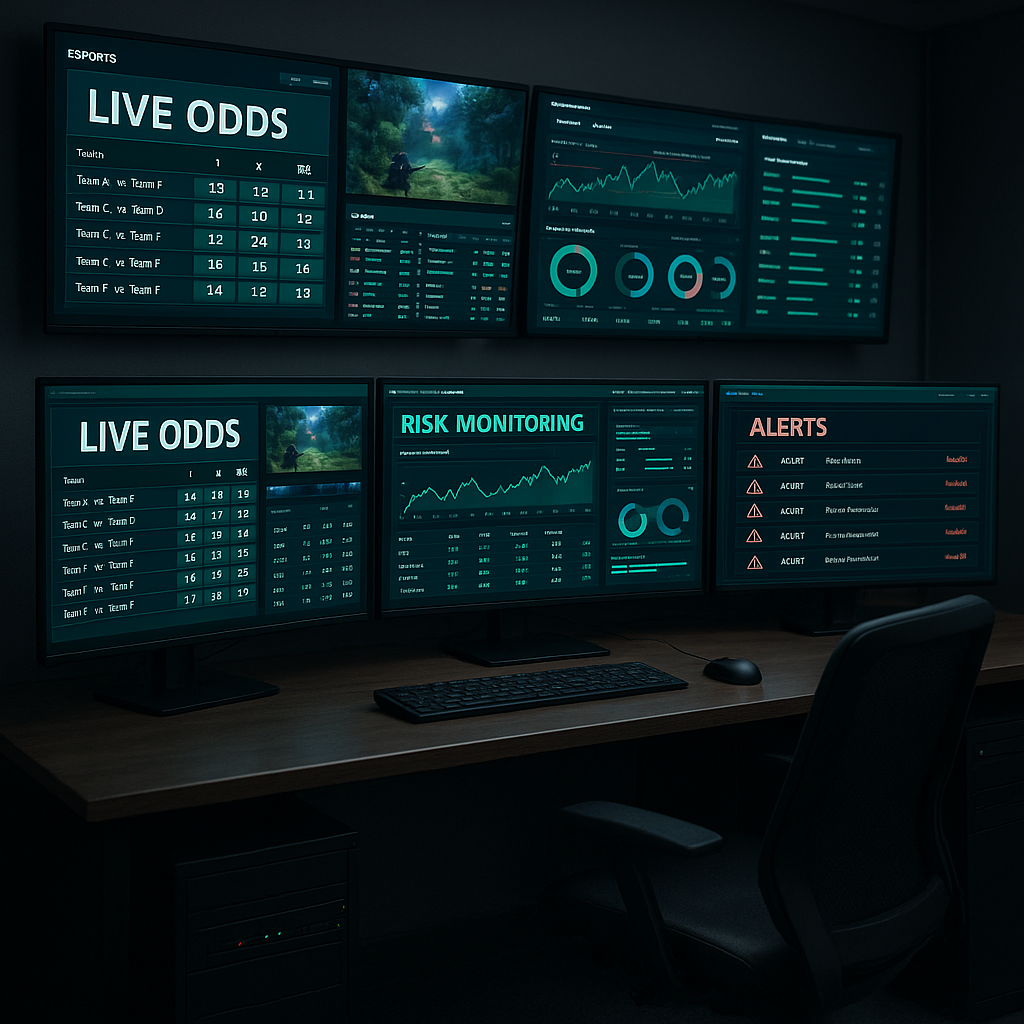
Discover how advanced risk management tools empower esports trading desks to protect margins, detect suspicious activity, and deliver consistently accurate odds across high-volume betting markets.
Why Risk Management Is Critical for Esports Trading Success
The esports betting landscape operates at unprecedented velocity. Matches unfold rapidly, odds shift in real-time, and betting volumes surge across multiple titles simultaneously. In this dynamic environment, even minor risk management oversights can translate into substantial margin erosion or exposure to sophisticated fraud schemes. Trading desks handling esports markets face unique challenges that traditional sports simply don't present—from the sheer speed of gameplay to the digital nature of competitions that can attract coordinated betting attacks.
Effective risk management forms the backbone of sustainable esports trading operations. Without robust systems in place, operators struggle to maintain consistent profitability while protecting both their sportsbook and legitimate bettors. The stakes are particularly high in esports, where match-fixing scandals and integrity issues have periodically shaken confidence across the industry. Leading trading desks recognize that risk management isn't merely a defensive measure—it's a competitive advantage that enables them to offer deeper markets, more attractive odds, and superior uptime compared to competitors operating with less sophisticated controls.
Modern esports trading demands a multi-layered approach that combines real-time monitoring, automated controls, fraud detection, and margin optimization. The most successful operations integrate these tools into a cohesive infrastructure that protects profitability while enabling traders to respond confidently to market movements. This comprehensive approach separates industry leaders from operators still relying on legacy systems designed for traditional sports betting, which simply cannot keep pace with the unique demands of esports markets.
Real-Time Monitoring and Liability Management Tools
Real-time monitoring capabilities represent the first line of defense for esports trading desks. Advanced liability management systems track exposure across thousands of markets simultaneously, providing traders with instant visibility into risk concentrations that could threaten profitability. These tools monitor betting patterns across multiple dimensions—by match, by market type, by bettor segment, and by game title—enabling trading teams to identify and address imbalances before they escalate into significant liabilities.
The velocity of esports betting demands monitoring systems that operate at millisecond-level precision. During high-profile tournaments like CS2 Majors or Dota 2 Internationals, betting volumes can spike dramatically within seconds as in-game momentum shifts. Sophisticated monitoring platforms alert traders to unusual activity patterns, sudden liability concentrations, or odds movements that diverge from expected parameters. These real-time insights enable proactive adjustments that protect margins while maintaining competitive pricing across all markets.
Leading esports trading operations leverage monitoring tools that integrate seamlessly with odds feeds and back-office platforms. This integration creates a unified view of risk exposure, combining liability data with real-time match statistics and historical betting patterns. Traders can quickly assess whether a surge in betting activity reflects legitimate market sentiment or potential manipulation attempts. The ability to visualize exposure across entire tournament brackets, combined with drill-down capabilities into specific markets, empowers trading desks to make informed decisions under pressure while maintaining the high uptime and reliability that modern sportsbooks demand.
Fraud Detection and Integrity Protection Systems
Esports betting integrity remains paramount for sustainable operations and regulatory compliance. Advanced fraud detection systems employ machine learning algorithms and pattern recognition to identify suspicious betting activity before it impacts sportsbook profitability. These systems analyze vast datasets—comparing betting patterns against historical norms, cross-referencing bettor behavior across multiple matches, and flagging anomalies that suggest coordinated attacks or insider information exploitation.
Proactive fraud detection extends beyond simple threshold alerts. Modern integrity protection systems build comprehensive profiles of normal betting behavior for different market types, game titles, and tournament tiers. When activity deviates significantly from these baselines—such as unusual late-game betting concentrations or synchronized wagers from multiple accounts—the system immediately flags these patterns for trader review. This proactive approach has proven essential for detecting match-fixing attempts, which unfortunately remain a persistent challenge in certain esports segments and regional markets.
Strong monitoring and blacklist management capabilities form critical components of comprehensive fraud protection. Leading trading desks maintain dynamic blacklists of accounts, IP addresses, and betting patterns associated with previous integrity violations. These blacklists integrate across the entire trading infrastructure, automatically blocking or limiting suspicious accounts while alerting traders to potential threats. This commitment to esports integrity not only protects individual sportsbooks but strengthens confidence across the entire esports betting ecosystem, supporting the industry's continued growth and legitimacy in regulated markets worldwide.
Margin Optimization and Automated Trading Controls
Margin optimization tools enable trading desks to maximize profitability while maintaining competitive odds that attract betting activity. Advanced systems analyze historical performance data across different market types, identifying optimal margin levels for pre-match versus live betting, popular versus niche titles, and high-volume versus specialized markets. These insights empower operators to fine-tune pricing strategies that balance competitiveness with sustainable profitability—a critical capability in the increasingly competitive esports betting landscape.
Automated trading controls provide essential guardrails that protect margins even during periods of extreme volatility. These systems establish predefined parameters for odds movements, stake limits, and exposure thresholds, automatically adjusting markets when activity approaches risk limits. During critical moments—such as unexpected player substitutions or technical pauses—automated controls can suspend markets, adjust maximum stakes, or modify odds to reflect increased uncertainty. This automation ensures consistent risk management even when trading teams face simultaneous demands across multiple live matches.
The most sophisticated trading operations combine automated controls with human expertise in a hybrid model that leverages the strengths of both approaches. Machine learning algorithms process vast amounts of match data and betting activity in real-time, making micro-adjustments to optimize margins across hundreds of markets simultaneously. Meanwhile, experienced traders focus on strategic decisions, integrity monitoring, and handling exceptional circumstances that require contextual judgment. This division of labor enables trading desks to scale operations efficiently while maintaining the accuracy and reliability that defines industry-leading esports odds feeds.
Building a Resilient Esports Trading Desk Infrastructure
A resilient trading desk infrastructure integrates all risk management components into a cohesive ecosystem that supports sustainable growth. This infrastructure must balance multiple priorities simultaneously—protecting profitability, maintaining high uptime, ensuring regulatory compliance, and delivering the engaging betting experience that attracts and retains younger bettors. Leading operators recognize that infrastructure resilience isn't merely about redundancy and failover systems; it's about creating an adaptive platform that evolves alongside the rapidly changing esports landscape.
The foundation of resilient infrastructure combines proprietary tools, advanced data science, and seamless integration capabilities. Trading desks require back-office platforms that provide intuitive control over margin settings, market templates, and risk parameters across all supported titles and tournament formats. These platforms must integrate effortlessly with odds feeds, streaming services, engagement layers, and third-party risk management tools. The best solutions offer customizable workflows that accommodate different operational models—whether operators run in-house trading teams, partner with specialized trading desk services, or adopt hybrid approaches that combine both strategies.
Building resilience also means preparing for the future of esports betting. The market continues to expand into new titles, new regions, and new regulatory frameworks. Trading desk infrastructure must support emerging game formats like esimulators and fast betting content, which provide 24/7 betting opportunities beyond traditional esports tournaments. It must accommodate player-based markets that drive deeper engagement, BetBuilder functionality that enables personalized bet combinations, and data-rich widgets that help bettors analyze and strategize around each match. Operators who invest in comprehensive, forward-looking infrastructure position themselves to capitalize on growth opportunities while managing risks effectively across an ever-expanding esports betting ecosystem.
The most successful esports trading operations view risk management not as a constraint but as an enabler of innovation and growth. With robust monitoring, fraud detection, margin optimization, and automated controls in place, trading desks can confidently expand market coverage, offer more competitive odds, and deliver the superior betting experience that defines industry leadership. This comprehensive approach to risk management infrastructure separates operators who struggle with esports' unique challenges from those who thrive, capturing market share and building sustainable competitive advantages in one of gaming's fastest-growing segments.
-2.png?width=352&name=LN_2400x1254_partnership_Gamescorekeeper%201%20(2)-2.png)
-1.png?width=352&name=LN_2400x1254_partnership_Gamescorekeeper%201%20(1)-1.png)
-1.png?width=352&name=LN_2400x1254_partnership_Gamescorekeeper%201%20(2)-1.png)